We visited a potential piano teacher (for Jillian) this past Saturday. At 12 miles (about 30 minutes) away, she was the nearest teacher we could find on the Suzuki of Americas website. Sure, there are closer teachers that do not employ the Suzuki method, but I’ve talked with three different people, one former student (hi Discopalace) and two parents of Suzuki students about their experiences. These conversations have persuaded me that the extra few minutes are worth it. After trading a couple of emails and a phone call, potential piano teacher (henceforth “PPT”) agreed to meet us, and asked us to sit on a lesson she would be conducting for a little girl about Jillian’s age.
Saturday arrived, and at 8:30 AM, so did we, at PPT’s house. When we opened the front door, we stepped immediately into her medium-sized living room, dominated by a beautiful, giant rosewood Kawai RX-3. It was an absolutely gorgeous piano, alongside a small, 61 key Yamaha digital, which I later learned was for PPT’s use, to accompany students during lessons. Every wall that didn’t have a window was covered by bookcases, floor to ceiling, and every bookcase was full. Plants hung in front of the windows; Jillian says there were 18 of them, and I’ve learned not to doubt her on this sort of thing. In the rest of the room, there was seating for 6 in the form of a couch, a loveseat, a chair-and-a-half, all arranged in a C shape around the piano, along with an old organ, the kind with pedals to blow air through. All this in a room about 15’ x 20’. Crowded enough for you?
I wanted to get there early, to talk to PPT about Jillian, our expectations for a piano teacher, and logistics in terms of lesson times, dates, and practice requirements. PPT had another agenda. She’d barely shaken our hands before handing over all sorts of documents about the Suzuki method, books that are required, recital information, and that sort of thing. Before she’d totally finished her pitch, her student came in, accompanied by her father, bowed*, and began her lesson. PPT continued talking to us as the lesson began, explaining what they were working on, where her student was in the learning process, and how the little girl had progressed in her 18 months of lessons. It felt sort of uncomfortable to be the focus of attention; but neither the little girl nor her father seemed to mind. Jillian sat by me for the first 15 or 20 minutes, but eventually the ants in her pants prevailed, and she started wandering over to the piano bench to get a better view. I could tell she wanted to play, but we never got the chance. The next students (a brother / sister combo) came in before the lesson was over, and really crowded the place. We thanked the little girl and her dad for letting us watch their lesson, thanked PPT for her time, got our coats, and headed home.
* - “Bow to your sensei! Bow to your sensei!” (Bonus points to anyone who gets the reference without clicking on the link.)
There are several aspects of the Suzuki method that appeal to me. The first is the requirement that parents, whether they are musicians or not, attend all lessons. The reasoning behind this is that when the child is home practicing, the parents should reinforce the points emphasized by the teacher. I know what you’re thinking, and you’re right. Of course I’m excited to do this, even though Jillian has sometimes refused my help in the past. But I am also excited to listen to the lessons for my own sake. Two lessons for the price of one! (Hold that thought.) But there is also the aspect of monitoring the lessons, hearing the teacher for ourselves, and watching the improvement over time. Jillian’s first piano teacher did not allow us to sit in on the lessons. And we never felt like we got good information about how things went, either from Jillian or the teacher. “She’s doing great! Keep up the good work!” The first couple of times, this was nice to hear. After hearing it every time for weeks, it became aggravating. Now we’ll get to see and hear the lessons, instructions, and progress for ourselves.
Another thing: once a month, the teacher gathers all her students for a collective lesson / recital. I could see a lot of value in this. First, there’s the whole social aspect of meeting other like-minded kids and developing long-term friendships with them. But also, hearing others play the same pieces you did, giving them their own personal but still technically correct touch… that’s gotta be instructive. Suzuki people sure seem to think so. Then there is an actual formal recital every three months. The goal here is to throw the student in front of people often enough to where performance anxiety eventually melts away. Perhaps that’s overstating it… the anxiety may never go away, but perhaps its manifestation decreases over time, with experience.
Finally, back to this two lessons for the price of one thing. The folks who came in as the lesson concluded were a mom and two children, a boy (about 10) and a girl (about 13). They are both students. She asked "Who wants to go first?" and though we left before we heard the answer, this intrigued me. Turns out she gives a small family discount for multiple students from the same family. Remember, Jillian was teaching Jason piano. In future years, Jason, Rowan, or Joseph might also all have piano lessons. If Jillian goes through the method, she can shepherd any (all?) of her younger siblings who may do likewise. After all, she'll have already played the pieces herself.
I asked Jillian what she thought of the experience. Of course, I expected her to like the piano and the teacher, who seemed very nice and supportive. I did not expect her to be excited about the public performance aspect of the Suzuki method, which she was. What’s more, in addition to the group lessons and quarterly recitals, you also periodically go in front of judges to play standard Suzuki pieces. They rate you on some sort of point system, and offer suggestions for improvement and future growth. Over time, as you accumulate points, you get some sort of Gold Cup, and then start with the next grade. Upon completion of that, you get a larger Gold Cup, and so on and so forth. Of all the things she could have been impressed with or excited about, it was this aspect that fired her up the most. Well then.
We haven’t signed up yet. There is one other teacher nearby. Although she isn’t a Suzuki teacher, friends of friends have gone to this woman for piano lessons for years, and speak in hushed, reverend tones about what a good teacher she is. We may go meet her too, and then make a decision.
One way or another, expect Jillian to start her lessons in January.
- Aw2pp, who, in a shameless ripoff of popular iconoclastic Chicago blogger Mimi Smartypants, is going to begin signing off on his posts
Friday, December 19, 2008


Tuesday, December 16, 2008
Story link for Jillian
I was talking with Jillian the other day about how Santa does his thing. She has some very specific, and logical doubts about his ability to take care of business, worldwide, on Christmas Eve.
Turns out a college physics professor has investigated this very question. I told her I would post a link on Aw2pp.
Technology helps Santa make magic, scientist says
Turns out a college physics professor has investigated this very question. I told her I would post a link on Aw2pp.
Technology helps Santa make magic, scientist says
Monday, December 15, 2008
Tonsil Day 2008, Take Deux
This morning, The World's Largest Kindergartner goes in to have his tonsils and adenoids removed. As an added bonus, they'll leave him with a new set of ear tubes. Yes, Jillian underwent this same procedure earlier in the year, albeit without the ear tube part. We, her parents, didn't enjoy that at all, and we're not looking forward to shepherding Jason through the process. But it needs to be done. He's been having some hearing trouble these last few months (years, maybe?), and we're persuaded this is the right course of action to address that.
More on Jillian's piano teacher later. Gotta take care of business with Jason first.
More on Jillian's piano teacher later. Gotta take care of business with Jason first.
Thursday, December 11, 2008
Meeting a teacher Saturday morning
Just a quick FYI, Jillian and I are going to meet a prospective piano teacher Saturday morning. She is a Suzuki teacher. We chose Saturday because she'll be giving a lesson to a 7 year old girl then, and she invited us to sit in.
If I were her (and/or if I were the student), this would freak me out a little... perfect strangers evaluating the proceedings, to decide if they want to plunk down a bunch of money for lessons. But this is, apparently, not uncommon, so we'll go with it.
If I were her (and/or if I were the student), this would freak me out a little... perfect strangers evaluating the proceedings, to decide if they want to plunk down a bunch of money for lessons. But this is, apparently, not uncommon, so we'll go with it.
Friday, December 5, 2008
Jillian's Piano Teacher Search Continues
We finally did get a list of piano teachers from the school's music teacher. I don't have it in front of me, but it was a surprisingly long list of names. I'd say, oh, 80 or so. Then, hand-written on the last page was something like this:
"I don't know any of these people. But I do know (insert name), who is not on this list. I think she would be a good one to start with."
Before going any further, let's review Jillian's list of requirements for her piano teacher, as described here: She (there's already an implicit requirement) needs to be nice, and not old. Ok then.
After a bit of phone tag, we (well, Sue) finally got to talk with the suggested person. After a short conversation, it was agreed that Jillian was too advanced for this teacher. Yes, that's correct. Too advanced. Turns out the nice, young-ish sounding lady was more of a music teacher, specializing in flute, but willing to dabble in some introductory piano here and there if the need arises. Jillian has already learned everything this woman would have taught, and now we're stuck with going back to the long list of anonymous names, trying to divine which, among them, is nice and not old.
Jillian has not played much piano lately. I think she's gone as far as her toolset will allow, if that makes any sense. That is, her skills have allowed her to play a set of pieces, including her own, and she's stuck in that place until she gains more tools.
Why I don't do scales
In and amongst working on I Due Fiumi, I am also starting Alfred's Book Two (II). Sort of. Truth is, I broke open II about two weeks ago or so, and in 30 minutes, I was able to play the very first piece. It was very easy, probably about as easy as some of the pieces in the middle of Book One (I). I understand that the difficulty ramps up quickly in II. Those who have gone before me point out that, on average, it takes about twice as long to make it through II as it does I. For me, that would mean Book Three (um, III) would be about a year and a half away. Seems like a long time.
It is clear to me that II has a lot to offer. I also understand that there are very useful things for a new piano student to learn from it. Some of those lessons will make it easy for me to learn to play very interesting music. And yet, I have not even begun the second piece. Why?
Simple. I Due Fiumi is more fun. More interesting. Sounds better. I don't have hours and hours each day to spend on the piano.* When choosing what to do with that limited time, of course I'll choose to work on the more rewarding piece of music.
* - This is not exactly true, of course. I do have hours of unscheduled time I could be spending on the piano. I simply choose to sleep during those hours instead. Priorities.
Mind you, the Alfred's Method Books are not composed of mindless, numbing exercises. Those are out there, of course. Hanon exercises, scales, arpeggios... those are things generations of piano teachers have foisted upon their students, saying basically "These are good for you. I learned the piano this way. You will learn the piano this way." Alfred's tries to teach those same lessons using actual pieces of music. Yes, some of these traditional exercises are mixed in here and there, but the point of the method is to make music. And yet... and yet... I apparently don't find it compelling enough to set aside I Due Fiumi (or whatever I attempt next).
So the question I ask myself (and any of you, if you care to venture an opinion) is this: am I harming my growth as a piano player by not doing scales, arpeggios, and traditional piano exercises? Am I trying to run before I walk? Or is there long-term technical benefit to doing what I am doing? That is, am I still learning whatever it is that I am supposed to learn from traditional exercises?
I've posed this question to fellow beginners and intermediates at pianoworld. Will let you know what insights I get from that.
Thursday, December 4, 2008
Working on I Due Fiumi
Lot of snow the last few days. It's like Winter knew. "Hey, it's December, let's let them have it!" Dad was here from Alabama for Thanksgiving, and got outta Dodge exactly 24 hours before the first flakes fell.
I am pleasantly surprised at how quickly this is coming together. The whole piece revolves around measures 44 through 52. I'm doing the Chuan Chang thing on these during the day, a few minutes here and a few minutes there as I get the opportunity. By that, I mean that I am playing these measures over and over, in high repetition, trying to do so correctly at whatever tempo I can manage. Right now, not so fast. But getting faster. At this rate, I may have an initial recording for you in a week or so.
I am pleasantly surprised at how quickly this is coming together. The whole piece revolves around measures 44 through 52. I'm doing the Chuan Chang thing on these during the day, a few minutes here and a few minutes there as I get the opportunity. By that, I mean that I am playing these measures over and over, in high repetition, trying to do so correctly at whatever tempo I can manage. Right now, not so fast. But getting faster. At this rate, I may have an initial recording for you in a week or so.
Tuesday, December 2, 2008
Things I never thought I would hear myself say, Volume I
Children are playing in the basement, making noises I couldn't identify. Investigation ensues.
"What's up, guys?"
Jillian: "Hi, daddy, we're getting ready for our magic show."
"Jason, what is that in your hand?"
"Ham?"
"No, your hand. What is in your HAND?"
"Ham."
"Jason, come here." I inspect his hand. I'll be darned, he has little slices of ham in his hand. "You are playing with ham? What on earth made you think, 'Hey, let's go get some ham and play with that'?"
Jillian attempts a rescue. "Daddy, we had to have something that rhymed with 'Alacazam' and all we could think of was ham. That way we could say "Abracadabra, Alacazam, here is Jason eating ham!'"
And now here it comes...
"HAM... IS NOT... A TOY!"
I had been doing pretty well up to that point, considering the content of the conversation. But at this point, I could no longer hold in the laughter I was stifling. Which made it really difficult to be (or pretend to be) angry. Still, there was some cleanup to be done, and we retraced our steps from the basement to the fridge, picking up little flakes of ham as we went along.
I'd like to think we won't have to cover this subject again, but who knows.
Happy 40th Birthday...
... to Susie, the Official Twin Sister of Aw2pp! (In the unlikely event she stops by here before I call her later today.)
Saturday, November 22, 2008
Why you can't always trust these things...
Typealyzer is a website that purports to tell you the personality type of a blog's author. Simply enter the URL into the site, and it will tell you all about that person. Here is what it has to say about me.
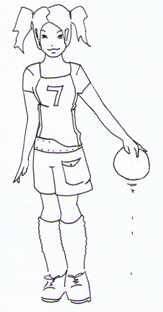
I have to say, the notion that I am a left-handed, pig-tailed, kneesock wearing female, who is also an impulsive extrovert... this is going to amuse me for quite some time. I will say this, though. "They might have a problem with sitting still or remaining inactive for any period of time." Yup. Guilty as charged there.
(FWIW, last three times I submitted a Meyers-Briggs profile, they all turned up INFP.)
The analysis indicates that the author of http://aw2pp.blogspot.com/ is of the type:
ESTP - The Doers
The active and playful type. They are especially attuned to people and things around them and often full of energy, talking, joking and engaging in physical out-door activities.
The Doers are happiest with action-filled work which craves their full attention and focus. They might be very impulsive and more keen on starting something new than following it through. They might have a problem with sitting still or remaining inactive for any period of time.
The Doers are happiest with action-filled work which craves their full attention and focus. They might be very impulsive and more keen on starting something new than following it through. They might have a problem with sitting still or remaining inactive for any period of time.
I have to say, the notion that I am a left-handed, pig-tailed, kneesock wearing female, who is also an impulsive extrovert... this is going to amuse me for quite some time. I will say this, though. "They might have a problem with sitting still or remaining inactive for any period of time." Yup. Guilty as charged there.
(FWIW, last three times I submitted a Meyers-Briggs profile, they all turned up INFP.)
Friday, November 21, 2008
I want to keep this guy on my good side
From this Pianoworld topic, I quote Monica K, a periodic visitor here.
Mind you, Monica, from what I understand, is a professor at the University of Kentucky. English, I think? Point being, as much as she sounds like a stammering, giddy teenager who has just metThe Osmonds Wham! the Hanson Brothers Justin Timberlake (insert whoever is today's teen idol, I am clearly not with-it-and-hip) for the first time, this is an otherwise reasonable and articulate person. She was rendered speechless by a impromptu greeting from Ludovico Einaudi.
This Anthony person... we know him as Sawtooth. He blindsided poor Monica. Shameful. Who knew he was capable of such trickery, such surreptitious deception? This is a person I want to keep on my good side. Sawtooth, can I get you a glass of water or something? A pillow? Newspaper? Everything good there?
Monica, Anthony, and a handful of others are in San Francisco for an Einaudi concert. Looks like it's the only North American event on the docket. If he makes it to Chicago, we're there. I think he'd make a great Ravinia guest, but what do I know?
So I landed safe and sound in SF, on my way to the Einaudi concert. As the plane taxied to the gate, I turned my cell phone on, and it rang a couple of minutes later. It was AnthonyB, who asked if I had arrived, and we chatted a minute or two about the free concert in a music store that Einaudi was giving tonight, which Anthony was able to attend but I was not (I didn't find out about it until AFTER I had booked my flight).
So then Anthony said something like "somebody wants to talk to you" and then another voice came on the phone, saying "Monica?" I thought it was some other PW member that Anthony had hooked up with, so I said "Yeah? Who is this?" And then the person said "This is Ludovico."
At which point I said something brilliant like "You're kidding!" and then started babbling and telling him how much I was looking forward to the concert tomorrow. [heart] He said "I will see you tomorrow" and then handed the phone back to Anthony.
Wow. Just wow.
The people around me on the plane thought I was pretty weird, though.
Mind you, Monica, from what I understand, is a professor at the University of Kentucky. English, I think? Point being, as much as she sounds like a stammering, giddy teenager who has just met
This Anthony person... we know him as Sawtooth. He blindsided poor Monica. Shameful. Who knew he was capable of such trickery, such surreptitious deception? This is a person I want to keep on my good side. Sawtooth, can I get you a glass of water or something? A pillow? Newspaper? Everything good there?
Monica, Anthony, and a handful of others are in San Francisco for an Einaudi concert. Looks like it's the only North American event on the docket. If he makes it to Chicago, we're there. I think he'd make a great Ravinia guest, but what do I know?
Thursday, November 20, 2008
Making my way through Recital #12
There were 77 submissions for Recital #12, totaling almost four hours of music. I'm about two-thirds of the way through, and should be done with one more train trip. There is also a very lively comments thread on Pianoworld. I would like to give my own feedback to the recordings, but how many different ways are there to say “Wow, that was awesome!” Truth is, I don't have much else to say; I'm in awe of the deep talent pool and breadth of these recordings.
More than one commenter has suggested that I am being too stringent in my self-assessment. Here is an example comment, from rustyfingers:
This was lovely. If I were you, I wouldn’t point out mistakes. We all make them, but sometimes they slip by unnoticed to those who don’t know the music as well as you do. :wink: This was an ambitious undertaking for someone who has been playing for less than a year, and you rose beautifully to the challenge.
AdagioM left a similar comment in the previous thread here. First of all, meaning no false modesty, I was not aware that everyone makes mistakes on their recital pieces. My children go to sleep every night listening to CD’s I have compiled from various sources, including Pianoworld recitals. The music is flawless to my ears. Since my recording did not reach a similar level of polish, I felt compelled to say so to anyone interested enough to come to my blog.
On the other hand, this comment has taken me back to some extremely compelling radio I heard a few months back. Paul Simon (not the bowtie Paul Simon, the other one) was being interviewed about his Graceland album, and agreed to voice-over an assessment of the title track while it played. This was fascinating. There were some parts of the song that greatly pleased him, like the opening 30 or 45 seconds or so. Something along the lines of “This is great, we’re not in any hurry, just meandering along, enjoying the trip. Then we get to one of the best opening lines I’ve ever written: The Mississippi Delta was shining like a national guitar.” There were other parts of the song he had intended to change before going to print (is that the right term?) on the album, and he just forgot to make the change. “Going to Graceland”, for instance, was just supposed to be filler until he came up with the “real” lyric, whatever that was going to be. And finally, there were other parts of the song that seemed perfectly fine at the time, but have really annoyed him ever since ("'ghosts and empty sockets'... I really forced that one...")
At the end of the song, he admitted that Graceland, warts and all, is his favorite song. Even a legendary professional musician, apparently, may never reach a point to where he/she is completely satisfied with even their best work... and yet they are able to take pride in it nevertheless. Why should I be any different?
So returning to rustyfinger’s comment, and the other encouragement I have received… I am not sure,perfectionist (er, competitive person) that I am, that I will ever get to the point to where I don’t acknowledge mistakes in a recorded piece… the question is whether or not I will admit them on the Interwebs, or leave them be. At this point, I think I’ll probably just grade myself generally, and leave the rest to you. If I’m really happy with something, I will let you know.
One more point. Last night, after putting the young-ins to bed, I busted out, from memory, a MUCH better version of Ombre than what I submitted for the recital. And laughed to myself.
More than one commenter has suggested that I am being too stringent in my self-assessment. Here is an example comment, from rustyfingers:
This was lovely. If I were you, I wouldn’t point out mistakes. We all make them, but sometimes they slip by unnoticed to those who don’t know the music as well as you do. :wink: This was an ambitious undertaking for someone who has been playing for less than a year, and you rose beautifully to the challenge.
AdagioM left a similar comment in the previous thread here. First of all, meaning no false modesty, I was not aware that everyone makes mistakes on their recital pieces. My children go to sleep every night listening to CD’s I have compiled from various sources, including Pianoworld recitals. The music is flawless to my ears. Since my recording did not reach a similar level of polish, I felt compelled to say so to anyone interested enough to come to my blog.
On the other hand, this comment has taken me back to some extremely compelling radio I heard a few months back. Paul Simon (not the bowtie Paul Simon, the other one) was being interviewed about his Graceland album, and agreed to voice-over an assessment of the title track while it played. This was fascinating. There were some parts of the song that greatly pleased him, like the opening 30 or 45 seconds or so. Something along the lines of “This is great, we’re not in any hurry, just meandering along, enjoying the trip. Then we get to one of the best opening lines I’ve ever written: The Mississippi Delta was shining like a national guitar.” There were other parts of the song he had intended to change before going to print (is that the right term?) on the album, and he just forgot to make the change. “Going to Graceland”, for instance, was just supposed to be filler until he came up with the “real” lyric, whatever that was going to be. And finally, there were other parts of the song that seemed perfectly fine at the time, but have really annoyed him ever since ("'ghosts and empty sockets'... I really forced that one...")
At the end of the song, he admitted that Graceland, warts and all, is his favorite song. Even a legendary professional musician, apparently, may never reach a point to where he/she is completely satisfied with even their best work... and yet they are able to take pride in it nevertheless. Why should I be any different?
So returning to rustyfinger’s comment, and the other encouragement I have received… I am not sure,
One more point. Last night, after putting the young-ins to bed, I busted out, from memory, a MUCH better version of Ombre than what I submitted for the recital. And laughed to myself.
Wednesday, November 19, 2008
Update on The World's Youngest Piano Teacher*
Following on Jason’s earlier update, let’s visit Jillian and her piano progress. We are actively seeking a piano teacher for Jillian. Recently, I asked her what she would be looking for from a piano teacher. “Well, I would want her to be young, like my music teacher at school, and really nice. Like my music teacher from school. She’s really nice.”
So Sue fired off an email to the school’s music teacher. Since she is Jillian’s Platonic Ideal for a piano teacher, wouldn’t have that been nice if she also taught private piano lessons? Sadly, she lives a cool 45 minutes from us, and no longer does lessons. So we’re waiting for a list of alternatives from her. Sue and I figured, incorrectly, it seems, that this sort of thing comes up all the time. I mean, if you were an elementary school music teacher, wouldn’t have a list or some sort of Rolodex of local piano teachers? Conversely, if you were a local piano teacher, wouldn’t you want to be on good terms with the local elementary school’s music teacher? Maybe music doesn’t work this way. Or maybe there isn’t much demand for piano lessons.
Returning to my conversation with Jillian.
“Jillian, what would you want to learn from your piano teacher?”
“Well, how to play the piano, of course.” Sometimes, Jillian can be a little sassy. We're working on it. This was not a sassy response. She was genuinely perplexed by this question.
“Right, but how will you know that you can play the piano? What do you want to be able to play that you can’t right now?”
“The rest of my Red book. And then the next one. Blue, I think. All the way to the Gray Book. I want to play the Gray Book some day. I bet that is really hard.” The books she’s referring to, by the way, are from the Schaum series, used by her first piano teacher.
“You realize your new teacher may use a different series of books, right?”
“Like what?”
“Oh, I don’t know. I just don’t want you to think that if your teacher breaks out a book you haven’t seen before, that you won’t still learn how to play the piano.”
“Ok, so long as she is nice. But I will still play my Red Book.”
That was about four days ago. This morning, at 6:45 AM, Jillian was on the piano, headphones on so as not to disturb the youngest or oldest members of the Aw2pp family, working through something in her Schaum Red Book.
* - I have no delusions that Jillian is really the World’s Youngest Piano Teacher, any more than I think Jason really is the World’s Largest Kindergartener. Just to be clear. I just have a thing for cool titles.
Monday, November 17, 2008
Update on The World's Largest Kindergartener
As mom3gram points out in the comments, we haven't heard much from or about Jillian or Jason lately on aw2pp. So let's visit Jason today.
Jason is doing well in kindergarten, making lots of new friends. This seems to come easy for Jason, who makes friends easily, much like Sue does. In Jason's case, very small buddies. I think they are naturally drawn by his adventuresome personality, easygoing manner, and hulking size. At a recent doctor's visit (hold that thought), Jason clocked in at 4'4" and 83 lbs. It does no good to compare these numbers with the growth curves for other 5.75 year-olds. ("Um, looks like he's the 120th percentile... no, wait, 125th...") Instead, think of it this way. He is the average height of a 8.5 year old, and the average weight of an 11.5 year old. And he can palm a volleyball. Football may be in his future, no? Certainly we can rule out a career as a jockey.

Sorry, he doesn't look 11 to me. 8 maybe.
Back to this doctor visit. We were advised by his school that Jason had failed two recent hearing tests. He failed yet another hearing test last year; we dismissed the result at the time as the byproduct of a cold / ear infection. Failing three hearing tests is much harder to dismiss. When he was a toddler, Jason did enjoy many ear infections. We were not surprised, then, when the doctor advised us that his ears are not draining fluid properly, and that this is probably a chronic condition that has been in place for some time. Poor Jay! He sometimes slurs his words, and true, he's not the world's greatest listener. But we'd just ascribed these characteristics to natural boyhood. We've had to consciously remind ourselves that he is, after all, not 11, not 8, but rather 5, and we've done our best to cut him the slack that he's due. We are (well, I am) still pretty hard on him sometimes, because it is sometimes frustrating to say the same things over and over again. But maybe there was a hearing problem all along.
(Sue just let me know that we have an an ENT appointment scheduled for a week from today.)
Now, mind you, Jason isn't deaf, and there is no indication that we're headed down that path. But if this has been getting worse, it would surely be tough to take up music in a serious way. Jason hasn't really taken to the new piano. Once in awhile, I'll catch him playing Dance of the Unicorns, the piece Jillian wrote (and now wants to rename... "I'm over unicorns.") But for the most part, perhaps because his teacher* doesn't have anything new to teach him, Jason hasn't put much bench time in. Now that we are a piano household again, and now that we've actively begun searching for a piano teacher, perhaps that will change.
* - For those of you just joining us, that would be Jillian, his six year old sister. Where have you been, anyway?
Jason has, however, expressed some interest in the guitar. I floated the idea to Sue that perhaps we don't sign Jason up for piano lessons, but rather guitar lessons (if Santa brings a guitar this year, that is). Jillian overheard this and protested, honestly and vehemently. "Daddy, I AM JASON'S PIANO TEACHER!"
Well then.
Thursday, November 13, 2008
Couple topics as we move on
Having submitted the Ombre recording for recital #12, I am now moving my attention to the next one. I have been tinkering with Stella del Mattino for a couple of months now, I haven't really given it my full attention. This, combined with some unfamiliar rhythm patterns, have kept me from making the sort of progress on Stella that I would have expected. But now that I don't have to strive for perfection on Ombre, perhaps Stella will come together quickly.
I hope so, because I have already begun experimenting with I Due Fiumi. Which seems like A LOT of fun, and not quite as hard as it sounds.
Congratulations to Michelle Himes (mom3gram) on her recent purchase of a Casio Ap-200. She claims my recent purchase of same had no influence on the decision, but I know better (wink). mom3gram, feel free to chime in periodically on your thoughts on the Casio. For me, I have mentioned a time or two that I am overall very pleased with it, albeit perhaps underwhelmed by the sound. I've had a handful (well, we're up to three, so not quite a handful) of people contact me on Pianoworld asking me to expound on this. So here is my take on that.
The Ap-200 has two 8 watt speakers. For comparison's sake, consider the Casio PX-800, which has 40 watt speakers. When you consider an acoustic piano, it's a deceivingly loud instrument. It would be very difficult to carry on a conversation in a regular-sized room while someone was playing an acoustic piano, unless they were playing very, very softly, and/or the room was very large. This is not true for my Ap-200... even when I have the volume turned up the whole way, which I usually do. I would assume that the Px-800 is probably much closer to an acoustic, at least in terms of volume. The sound samples, from what I understand, are the same. So although they would sound identical, 8 watt speakers simply can't provide the same volume and depth (especially depth in bass) as 40 watt speakers. This is my main complaint with the Ap-200. I preferred the sounds of the Yamaha instruments I cross-shopped.
That said, I am not disappointed. I understand that Casio had to save some money on speakers in order to keep the prices low. I didn't buy the Ap-200 for its sound, but rather for its sturdy stand, and keyboard feel. I can always improve on the sound by wearing headphones. The equivalent model from Yamaha (which would be the cheapest Arius) costs $200 more, and, to my fingers, is a league below the Ap-200 in terms of keyboard feel. This was more important to me.
Tuesday, November 11, 2008
First Recital Submission
You may or may not know that the deadline to submit an the 12th Quarterly Pianoworld.com recital is this Friday evening, 9:00 PM Eastern time, November 14. And while I know I still have a couple of days left, I am also honest with myself. This recording of Ombre is going to have to do. Feel free to listen while you read.
While there are a handful of mistakes in this recording (see below), and there is an overall lack of smoothness / musicality, it’s actually a pretty good attempt for me. No sense pretending to be better than I really am. If you gave me 20 cracks at running through Ombre, this would probably be better than 19 of them. That said, I am beyond the point to where I think I can measurably improve on this recording anytime soon. More (most?) importantly, I am ready to put Ombre to bed for now. I’ve been playing this a lot over the last month. Our poor piano is going to start wondering whether or not there is any other music to be played. “Oh, no, he’s playing this again…”
I MUCH prefer this over the Limbo recording I shared with y’all about a month ago. First off, while I downplay the quality of my performance, it’s still an improvement, musically, over the Limbo recording. Second, Ombre is more interesting than Limbo. I’ve mentioned this before, but it bears repeating; Limbo sort of wanders around in one place, never really getting anywhere. At the end, you find yourself exactly where you started, with nothing resolved. Ombre builds on some very simple themes, and (in theory) takes you somewhere with them, decorating the themes along the way with new layers of complexity. I’m glad to have worked on it. I have read that there are some LH patterns used in this piece that are reused in other, perhaps more sophisticated pieces. Hope so.
Anyhow, as I am listening to the recording, here are a few comments.
First 20 seconds – Some full note LH chords. I could stand to be a little more synchronized on these.
0:46 – This could be smoother.
1:09 – Trying to mix up the tempo a little the way Einaudi does.
1:12 – Worked awhile to get those triplets right.
1:27 – Missed a grace note there.
1:57 – Would like to have been bolder on the RH. This is me “playing timid” like I mentioned last time.
2:11 and 2:15 – Missed a note at 2:11, throwing off my concentration for a moment and resulting in a second error at 2:15.
2:23 – Should that first whole note chord be that quiet? I’ll need to check the music on that.
2:35 – Made an edit here, removing about 6 seconds of dead space. In real life, I was shuffling papers. The music for Ombre is 5 pages long, but I can really only fit three pages on the music desk of the Ap-200.
3:30 – You can hear me pausing ever so briefly, hunting for these LH octaves.
3:49 – Another missed note, but I recovered quickly this time.
4:40 – Would like to have boomed these low notes a little more.
Overall that’s four missed notes and a couple of things I would like to have differently. Now, mind you, I’m no perfectionist. But I am competitive. And after awhile, it got to the point to where this wasn’t so much a piece of music, but rather a competitive challenge to be overcome. This is good for now. And while it leaves room for improvement, it’s not so bad that the crowd on Piano Hero** would have booed me off stage.
* - No, really, I’m not. Stop snickering.
** - You know, if there were such a thing. Now THERE’S an idea…
Friday, November 7, 2008
Ombre update
On the one hand, I haven't put the hours and hours into Ombre that I had intended. On the other hand, I have been working on it for quite a long time, and, since it's really not THAT hard, I would have thought I'd have been able to save a clean take on it. And yet, no, this has eluded me. Recital entries are due one week from tonight. The best recording I have saved right now has a couple of cringe-worthy missed notes, and a couple of other hesitations. At what point do you say, "You know, the piece might be a bit of a stretch for Aw2pp, hmm?"
I'm still submitting it, of course. But I wanted to set your expectations appropriately. Basically, I am not happy with where I am on Ombre, and, though I'll continue to try to improve on what I've got recorded, I'm also quite looking forward to putting it to bed for awhile.
In the meantime, I have been noticing that a lot of songs on my iPod make subtle use of the piano. And in many cases, I had not noticed before that a piano was even being played. Look forward to some examples of these in the next few weeks.
Thursday, October 30, 2008
Playing boldly
Sawtooth and Monica have already heard this, so y'all go on while I catch everyone else up on the most recent piano lesson I learned.
I'm trying to record a clean take of Ombre. By "clean" I mean relatively error-free. That's all. It doesn't have to be musically expressive... I assume that will come some day. You haven't heard any of my Ombre recordings yet. There's good reason for this. I haven't been able to play it acceptably. As you've heard from my Limbo recordings, I'm not against posting something in a less than totally polished state. So the fact that I've not posted an Ombre recording should suggest to you the problems I am having with it. Lots of problems.
So the other day, I did something I've not done in months. I fired up the iPod, and tried to keep up with a recording. This was a stunning exercise. My observations, as I recall them, in the order they came to me.
1. "His (that is, Einaudi's) tempo is all over the place!"
Ombre starts out with 8 bars' worth of whole notes. I thought I had developed a pretty good feel for the timing of these notes, until I tried to play them in unison with the recording. Surprisingly, I wasn't able to stay with the recording, even when counting. Out loud. Like the beginning music student that I am.
It didn't take long to figure out what was happening. legato ed espressivo. Einaudi had taken liberties with the written notes, and went with whatever tempo his internal metronome suggested. This became more obvious when the music turned to 8th notes, and those were played unevenly. While I had tried to play the 8th notes straight up, he sped up and slowed down between (and even within) measures. As a result, his version (natch) sounds much more expressive, musically, than the robotic, calculated notes I had grown accustomed to playing.
2. "Oh, wow, that's fast."
I looked up Andante in Wikipedia. "Walking pace", it says.
I can dial in a number on the Ap-200's metronome, and matched it to the approximate tempo of Einaudi's recording. I learned that his version of Andante is about 15 beats per minute faster than mine. Whoops. Then when you factor the ebbs and flows in his tempo, it makes it very hard to play along with his recording.
On the other hand, he's the composer, he's the professional pianist, and I am a software technical sales geek trying to teach himself how to play piano. So between the two of us, who's more likely to be doing this correctly?*
* - "But aw2pp", I hear you say, "you're entitled to your own interpretation!" To which I say, "Poppycock!"** Once I am far enough along to actually choose to interpret a piece in multiple ways, I will then evaluate which of those I like best. For now, scrambling furiously just to play the notes (and not quite succeeding even at that) does not qualify as an interpretation.
** - I have a good memory for these things. As far as I can recall, that is the first time I have ever used that word. And almost certainly the last, unless it's to order up some of this. Glad you were here to enjoy this moment with me.
3. "Wow, the dynamic says p (piano signifying quiet), but when he jumps into the right hand, it's more like f (forte, or loud)."
It had never before occurred to me that two hands could be playing at a different volume. It's not that I had thought you couldn't do this... I had just never given the question any thought. In retrospect, how silly of me. Different instruments in an orchestra can play at different volumes. The instrument playing the melody had better rise above the supporting players. Why would this be any different when playing the piano?
Let me stop here and say, this turned out to be a really liberating discovery. Not to steal my own thunder, but the main point I took from this exercise was to play boldly. I had been trying to play this piece quietly, at least at the beginning, but the result was not so much a quiet and peaceful sound, but rather a timid, halting, uncertain one. Playing the right hand with bold certainty is actually much, much easier than trying to keep things quiet and mellow.
But I get ahead of myself.
4. That break around midway through (measures 49-52) make a great time to readjust music sheets.
Nothing Earth-shattering here. But one of my few complaints about the Ap-200 is that the music desk can only accomodate about 3 and a half pages of sheet music at a time. Ombre is 5 pages long. Problem solved. If you ever get to see a Youtube of me playing this, you'll get a kick out of seeing me furiously scramble to get everything set up for the second half, during a time in the music which would otherwise seem quiet and peaceful.
5. Wow, that's loud.
The second half then begins mf (mezzoforte, or "medium-strong"). Einaudi's mezzoforte is my fortissimo. Again, I assume he's right about this.
6. And yet, his way is actually easier.
And this is the big lesson I learned. Even though he played a very different version of Ombre than the one I had been trying (unsuccessfully) to teach myself, I picked up on it very quickly. The third time through, I made it the whole way through, pretty much keeping up with him, with just a few errors. My mind didn't have the luxury of playing (well, plodding) slowly, carefully, and indecisively. Who has time for that at 90-something beats per minute? My hands (especially the left hand) don't have time to measure the next octave / jump. They need to go. NOW! Once I reached that point, it was much, MUCH easier.
And a heck of a lot of fun.
I had one more observation about the interplay of resonances on the loud, booming, sustained low notes at the end. There was a whole new character of sound brought on by playing those like they were supposed to be played. But I need to make more sense of it before I say anything more on it.
Recital recordings are due in two weeks.
Monday, October 27, 2008
Meaning no offense to any Database Administrators here...
AW2PP: ...ok, we got the file adapter listener cleared up
AW2PP: trying to get update_email to work
AW2PP: it complains: "a1 Customer record for insert must have validated profile record defined"
ISSW Guy: hmm
ISSW Guy: damn...that makes no sense to me
AW2PP: ...seriously, right
AW2PP: i'm going through the email and phone maps to make sure they match up where they should
AW2PP: oh wait
AW2PP: N1
AW2PP: N1 CREDIT_HOLD has an invalid value
AW2PP: that's much clearer
ISSW Guy: that would do it
ISSW Guy: should be set to N
AW2PP: ...I had a lowercase n
AW2PP: I hate databases
ISSW Guy: ha
ISSW Guy: yep
ISSW Guy: the other day I had a failure because the "h" key is just above the "n"
AW2PP: ...and you have skinny little fingers... imagine the trouble corpulent DBA's have with this sort of thing
ISSW Guy: :)
AW2PP: ...it's enough to drive them surly
ISSW Guy: I'm cracking up here
AW2PP: ...come to think of it... most DBA's I've ever known... ah, never mind
ISSW Guy: :)
AW2PP: ...success! should I chance to update it?
ISSW Guy: awesome!
ISSW Guy: Heck no, don't touch it. It might break. hurry up and show the customer before it does!
Thursday, October 23, 2008
Don't listen to this, either
Sawtooth pointed out that yesterday's Limbo clip had some scratches in it, starting about halfway through. I listened to it on the train today, and I'll be darned, he's right. And if I can hear them on the train, they're pretty fierce.
I think this one might be cleaner.
I think this one might be cleaner.
Wednesday, October 22, 2008
Here's a clip, but don't listen to it
Since we've last caught up, I have probably put in about 6 hours of bench time.* During that time, I have tinkered a little with pieces from Alfred's Book One, including The Entertainer. And I have been working on the three Einaudi pieces in my bag of tricks, those being Limbo, Ombre, and Stella del Mattino.
* - For those of you just joining us, that's what I call the time I spent on the piano (bench). Just so we're clear.
Those six hours have basically caught me back up to where I was back in August. I have returned to the point to where I can sort of struggle through Ombre (although I've yet to play it error-free... still having trouble with the LH jumps and octaves near the Big Finish at the end*). I have the first RH phrase of Stella at the "Ok, that's passable, but it will hopefully improve while you work on the rest of the piece" stage. Stella is happy music, which in and of itself is a pretty compelling reason to get it up to speed soon. Which leads me to Limbo.
* - Duh, where else would a Big Finish be?
Limbo, as I am sure you recall, was my first (and so far, only clip). There will be more, I promise, but there just hasn't been much piano playing in the last couple of months. I posted a reasonable take of Limbo, by my standards. It wasn't perfect, and it needed a lot of polishing, but it was a reasonable representation of my level of expertise at the time. After having put in a few hours on the bench, I think I have returned to at least that level. But there's a difference this time... I have this fancy new Ap-200, which I can use to record my practice sessions. And in order to overcome the petrifying tension I feel when that little red LED begins flashing, I have begun to record EVERYTHING. Thankfully deleting is easy, because I delete pretty much everything. But once in awhile, something slips through relatively cleanly. For example, the Limbo clip you hear below. It's not bad. So why do I suggest that you not listen to it? Two reasons, really.
First, there are a total of 6 errors in it, as far as I know. Two of them are obvious flubs / missed notes; these will be obvious to everyone. There are another four errors that you'll have to pay closer attention to catch. And for some of them, you may need to know the music a little. Anyway, reason #1 why you shouldn't listen to this is because it isn't perfect.
But that's weak, I admit. After all, I am a beginning piano player, you'd expect errors from someone as inexperienced as myself. Well, I have shared another, even less polished Limbo clip with some friends and family, and was surprised to find out that the music is... well, it's sad. Believe me when I say, this had never occurred to me until I listened to myself play it. Tears have flowed. I don't mean for it to be sad, but I'll be darned, when I listen to it, that's the feeling. Isn't that strange? I don't feel that way when I play it. If you're already dysthymic (I love mixing that word in from time to time), knock yourself out, give this a listen. It'll speak to you. If you're not... well, I warned you.
I'll do my best to balance this out with some happy music as soon as I can play it.
Friday, October 17, 2008
Wow, that lawn grew in fast
Mentioned this during yesterday's epic post. On September 24, our newly seeded lawn looked like this.

Yesterday, while I was waiting for Jillian's bus, it looked like this.


Yesterday, while I was waiting for Jillian's bus, it looked like this.


Thursday, October 16, 2008
100th Post - Live-Blogging the Piano Arrival / Construction
I don't know if this is really my 100th post or not, but Blogger says it is. Wow, that seems like a lot.
Anyway, today is the day our new Casio Ap-200 is supposed to arrive from Kraft Music. Sue has taken Jason, Rowan, and Joseph "to town", so while it's just me at home right now, Jillian will be joining me shortly. It will then be the two of us putting the piano together, and taking it through its first paces.
The delivery company called yesterday afternoon to say it would be delivered today between 3:00 and 7:00. Inspired as I am by the myriad of bloggers* who kept a running commentary on last night's debate, I thought it might be fun to live blog the event. And if I am wrong about that, this will be the only time I try this.
* - I think it's ironic that a blogger.com, "bloggers" is flagged as a misspelled word.
3:00 PM - Not here yet.
3:01 PM - Not here yet.
3:02 PM - This is going to be a long afternoon if I keep this up. Going back to work now, I'll let you know when it gets here.
3:10 PM - I don't blame you if you don't believe this, but it's here. The doorbell rang, and when I answered it, there were two gentlemen and three boxes. The smaller one spoke to me:
"Where you want these boxes?"
"Upstairs."
(Inspects the bill of shipment. Shows it to me. ) "Says here to leave it at the front door."
"Then why did you ask me where I wanted it?"
(Pauses, looks around. Then...) "Where around the front door do you want it?"
"Inside please."
It wasn't even that pleasant, to tell the truth. Anyhow, here is my piano. This is where it must remain, as I am about to go outside and pick up Jillian from the bus stop.


3:15 - It occurs to me that it's been awhile since you've seen the yard. The grass has come a long way. I'll post some Fall pics soon.*
* - Wow, aw2pp is gonna be a busy place these next few days. Wake the children! Alert the friends and neighbors!
3:25 - Jillian's bus arrives. She bursts into tears at learning it's just me and her. And I have a customer call beginning in five minutes.
3:30 - (Puts on customer face and voice.)
3:50 - Phone rings. Jillian answers. A moment later, she comes in and asks if she can go across the street. Great, now who is going to help me with this 122 lb. box?

You're home alone, you wish to move this box upstairs... and then you see this printed on the box.
4:15 - Call over, work day is done, now it's time to put this thing together. Since we moved, I now have no idea where my tools (such as they are) are. Before she left, I asked Sue where a screwdriver was. She said something along the lines of "Upper left in the tic-tac-toe board." By that, she meant a built-in bookshelf in our upstairs hallway. How does she keep up with all this?
4:16 - I'll be darned, there it is, right where she said it would be. I shouldn't be surprised. She's got a gift for finding and keeping track of things, Sue does. Good thing, because this is a real challenge for me sometimes.
4:20 - You know, I can always unpack the box and bring components up piecemeal...
4:25 - Next tool challenge: Opening the boxes. I really don't know where anything is in this house. My kingdom for a pair of scissors! Or a utility knife!
4:29 - ... or a standard (flat-head) screwdriver! Found one of those in Sue's Lauffice.*
* - Laundry Room + Office = Lauffice. Sue's second favorite room** in the house.
** - In first place, the Mud Room.
4:35 - The instructions specifically tell me that I am supposed to keep the boxes and packing materials. The reasoning behind this is that I may have to return the piano if it is broken or damaged in transit. This concerns me. Partly because I don't want to have to return my piano, I hope it's in perfect working order. But more than that, you should see the packing materials. Modern Marvels should do an episode on how they get everything in there.

Yeah, I am going to remember what went where. Totally.
4:40 - Just moved the keyboard itself upstairs. Wow, is that thing heavy! I could use a heart rate monitor about right now. Anyway, time to look at the instructions. Next post might be awhile.
4:51 - "Caution: Assembly of the stand should be performed by at least two people working together."
5:10 - That looks about right. Somehow or other, I failed to capture a picture of the footpedal board attached upside down... let's just pretend that never happened, shall we? Agreed. Moving on.

5:15 - Wait, why am I doing this in silence? And why I am doing this without beer? (Goes downstairs to get the iPod... beer must wait.)

5:15 - Wait, why am I doing this in silence? And why I am doing this without beer? (Goes downstairs to get the iPod... beer must wait.)
5:18 - Jillian is back home and wants to help."Sure, Jill, can you liveblog for me? I'm getting behind." She decides against this, and composes something for her own blog. (I haven't mentioned that, have I? Yes, our six year old has her own blog. She LOVES comments. Just sayin'.)
5:25 - "Lift the piano onto the stand." Uh oh.
5:30 - How's that look?

5:35 - "No, Jillian, I need to put the bench together, hold on."

Ah, never mind, knock yourself out. I'm sure that technique will fly with that new teacher we now need to find for you.
5:36 - Einaudi queues up randomly on the iPod, which is now losing the fight with Jillian's piano tinkering for supremacy. Hmm, what box are those headphones in?

Here you go, Jill, try these on.
5:40 - I was right, the first piece played on our new piano is the piece Jillian composed herself.
5:45 - "Jillian, can I put that on my blog? I'm going to need to know what you call that song."
"It's called The Dance of the Unicorns', because when Unicorns dance, they bounce around, like this..." (She makes hand motions of large, bounding leaps.) "And the music sort of bounces that way, too, see?" (She makes the same motions, only this time hums the music along with it.)
5:50 - What? The desk lamp doesn't come with a bulb? Cheapskates. At least the shipping was free.
5:55 - I still haven't played it, but I am hungry. It's pizza time. I'll check back with you later.
7:30 - Pizza was good, and we have 30 minutes to kill before Total Drama Island.* It's piano time!
* - I can't believe we let our children watch this show. I mean, I understand what's funny about it... but I don't understand what Jill and Jay see in it. The target audience is years beyond them. On the other hand, I'll be darned if I am going to let them watch without me, so I can filter what they're seeing. Some things need be properly translated, you know.
8:00 - Time to make use of the key cover and shut down for now. First impression: I have lost quite a bit of ability in the last 6 weeks or so. What's more, there were some irregularities between the key actions on our old upright that had become familiar. I could sort of identify keys by how they felt, by how they varied in height and action weight. Not so with this new piano. Everything is uniform. It's going to take awhile for me to relearn my way around.
Second impression: headphones are comfortable, but perhaps a little weak. They come with a 1'8" input plug and a 1/4" adapter to connect to the piano. I wonder if more substantial headphones might make a difference?
Ok, it's already bedtime. Later all. Hope you had fun with this.

More on Soundfonts
So here's what I did. First, I loaded up and installed SynthFont, a tool for listening to and editing Midi files, and applying Soundfonts to them. It came with a handful of very small Soundfonts, most of which tried to provide coverage for all possible Midi inputs (not just piano) in a very small footprint. This is the sort of thing that gives Midi a bad name, since the sounds produced from these Soundfonts are really puny and fake-sounding. Nevertheless, these gave me my first glimpse into how the process works. I then did a search on PianoWorld for people's favorite Soundfonts*, and downloaded those that seemed to be mentioned most often. This gave me a rather lengthy list of free piano Soundfonts to try out. Perhaps over time, I'll find more. What's more, of course, there are geeky sound engineer / computer nerds cranking out new ones all the time.
* - I’m always interested in having others do this sort of heavy lifting for me. That’s part of the point of this blog, come to think of it. You’ve been very helpful, I must say.
Then what? Well, I wanted to get some practice converting Midi files, so I found some of my favorite piano pieces in Midi format. I learned that as long as you're keeping the search field to older music, things in the public domain, you can probably find a Midi file for it. I kept it simple, choosing things I knew pretty well: Liszt’s La Campanella (Paganini Etude #3, if you’re scoring at home) and Joplin’s The Entertainer.
Finally, I converted selected pieces using the various Soundfonts, and listened to the resultingMP3 WAV files*. I was surprised at how distinct the differences were. Of course, all pianos are not created equal, and all samples (even samples of the same piano) are not created equal. I also learned, pretty quickly, that the size of a Soundfont file is not useless information. For the most part, unless someone was really sloppy, a 5 MB Soundfont is simply not going to have as many layers of depth and interest as a 50 MB Soundfont.
* - Another tidbit I learned along the way... something I mentioned in the previous post. WAV files have all that CD (and better!) quality you expect from digital music, not Mp3's. Mp3's are fine for storing lots of music in a confined space, like an iPod, but if you are looking for the best sound, you aren't going to get it from an Mp3. There is some compression that happens during the creation of an Mp3, and this results in the loss of... something or other having to do with high-quality sound. If you want to make a CD, use the WAV files, if you can.
Let me give you an example. First, Soundfont (WST25FStein_00Sep22.SF2) is from an 1893 Steinway D. When it renders a Midi of La Campanella (Midi copyrighted by a Bernd Krüger, just so you know), sounds like this.
The EXACT SAME MUSIC (this point cannot be emphasized enough, you won’t believe it when you hear it) sounds like this on an upright Bechstein. Remember, these are the same notes (pitch, volume, sustain, all that) as the first.
Which do you like better? Me, I have a strong preference for the first, and not just because it’s a Steinway. (I came across a couple of Steinway Soundfonts that sounded muted, hollow, or simply too mellow for my tastes.) I will probably use this Steinway Soundfont on my own recordings, along with some others. I’m keeping the Bechstein, though, partly because the file is so small (which probably accounts for the lack of depth) and partly because I think it would sound great playing Ragtime. There could be times when a beat up piano is called for, you know?
After awhile, it became clear that there were four or five that I liked best. But the closer I listened to them, and the more I compared them, the less I could tell them apart. I think my ear / mind got tired of this exercise. So I am going to put this to rest for awhile*, and use them to render my own recordings. I'd bet after awhile, one will stand out over the others, and I will prefer it. Or maybe I’ll use them all, depending on my mood. We’ll see.
* - No train commutes in the immediate future, after all. And once the new piano arrives, I'll have enough to do. Not to mention, you know, life and work and sleep and all that.
* - I’m always interested in having others do this sort of heavy lifting for me. That’s part of the point of this blog, come to think of it. You’ve been very helpful, I must say.
Then what? Well, I wanted to get some practice converting Midi files, so I found some of my favorite piano pieces in Midi format. I learned that as long as you're keeping the search field to older music, things in the public domain, you can probably find a Midi file for it. I kept it simple, choosing things I knew pretty well: Liszt’s La Campanella (Paganini Etude #3, if you’re scoring at home) and Joplin’s The Entertainer.
Finally, I converted selected pieces using the various Soundfonts, and listened to the resulting
* - Another tidbit I learned along the way... something I mentioned in the previous post. WAV files have all that CD (and better!) quality you expect from digital music, not Mp3's. Mp3's are fine for storing lots of music in a confined space, like an iPod, but if you are looking for the best sound, you aren't going to get it from an Mp3. There is some compression that happens during the creation of an Mp3, and this results in the loss of... something or other having to do with high-quality sound. If you want to make a CD, use the WAV files, if you can.
Let me give you an example. First, Soundfont (WST25FStein_00Sep22.SF2) is from an 1893 Steinway D. When it renders a Midi of La Campanella (Midi copyrighted by a Bernd Krüger, just so you know), sounds like this.
The EXACT SAME MUSIC (this point cannot be emphasized enough, you won’t believe it when you hear it) sounds like this on an upright Bechstein. Remember, these are the same notes (pitch, volume, sustain, all that) as the first.
Which do you like better? Me, I have a strong preference for the first, and not just because it’s a Steinway. (I came across a couple of Steinway Soundfonts that sounded muted, hollow, or simply too mellow for my tastes.) I will probably use this Steinway Soundfont on my own recordings, along with some others. I’m keeping the Bechstein, though, partly because the file is so small (which probably accounts for the lack of depth) and partly because I think it would sound great playing Ragtime. There could be times when a beat up piano is called for, you know?
After awhile, it became clear that there were four or five that I liked best. But the closer I listened to them, and the more I compared them, the less I could tell them apart. I think my ear / mind got tired of this exercise. So I am going to put this to rest for awhile*, and use them to render my own recordings. I'd bet after awhile, one will stand out over the others, and I will prefer it. Or maybe I’ll use them all, depending on my mood. We’ll see.
* - No train commutes in the immediate future, after all. And once the new piano arrives, I'll have enough to do. Not to mention, you know, life and work and sleep and all that.
Subscribe to:
Posts (Atom)
